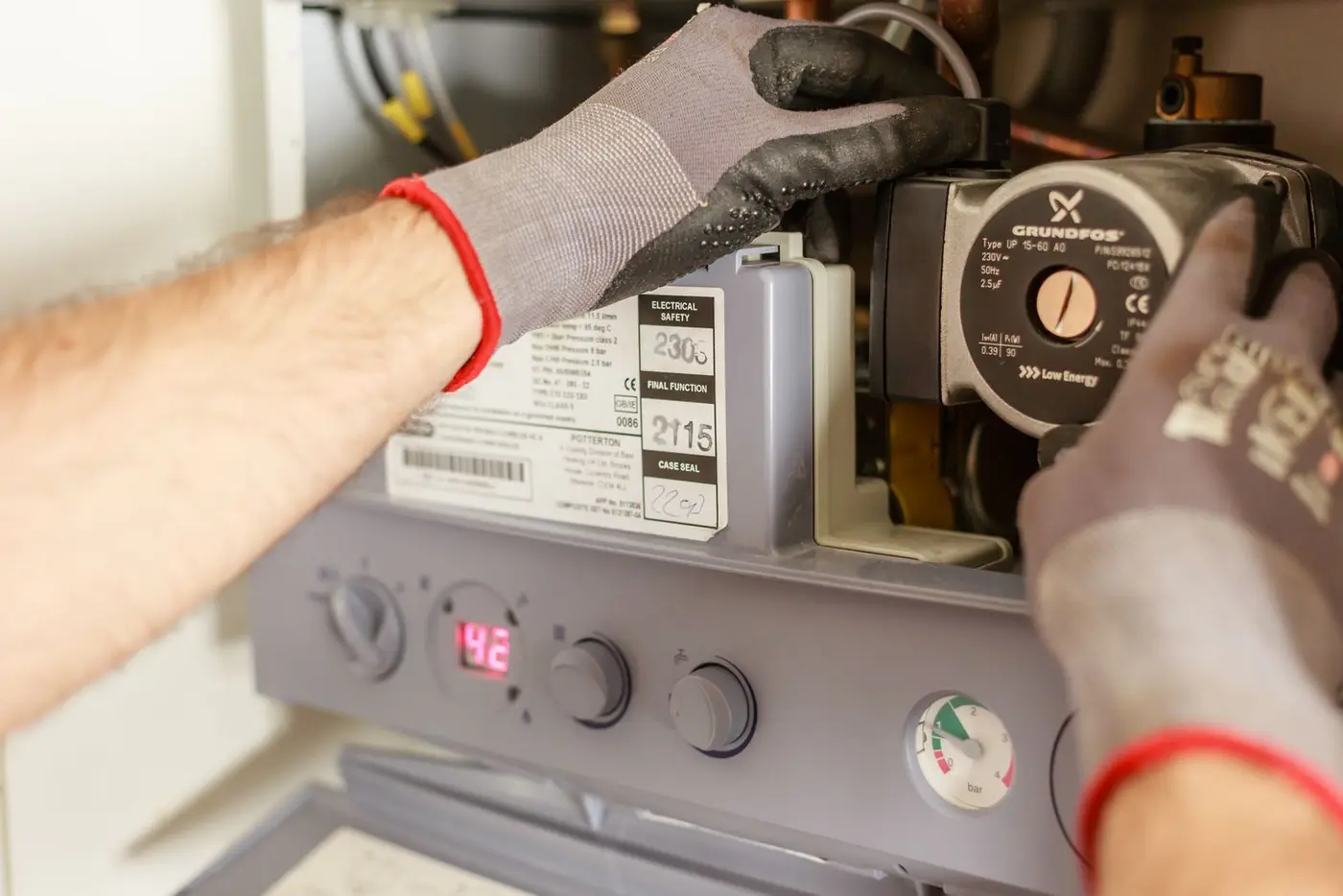
Water heaters in Mesa do not get an easy life. The water here carries a heavy mineral load, and summer heat bakes garages and outdoor closets for months at a stretch. Both forces work on your tank every single day. Both shorten its life.
The good news is that most early failures are predictable. A tank rarely dies without warning, and the parts that wear out first are simple to replace. This post walks through what actually kills water heaters in the East Valley and what you can do about it.
Hard water is the main culprit in the East Valley.
Mesa water is hard, which means it carries dissolved calcium and magnesium. When you heat that water, the minerals fall out of solution and settle on the bottom of the tank as scale. The layer builds year after year until the burner is heating rock before it ever heats water.
That scale layer does real damage. It forces the burner to run longer to hit the same temperature, which raises bills and overheats the steel underneath. If you hear popping or rumbling when the tank fires, that is water boiling up through sediment. It is the sound of your heater working against itself.
The anode rod dies first, so the tank does not have to.
Inside every tank style heater is a sacrificial anode rod, usually aluminum or magnesium. Its whole job is to corrode so the steel tank does not. Aggressive minerals attack the rod instead of the tank lining, and once the rod is gone, the tank itself starts to rust from the inside.
Hard desert water eats anode rods faster than most owner manuals assume. A rod that would coast for years in soft water country can be gone much sooner here. Nobody sees it happen, because the rod hides under a hex head on top of the tank. Pulling and checking it every couple of years is the single best habit for tank life.
Desert heat stresses the whole system.
Most Mesa water heaters live in a garage, and a garage in July is brutal. Heat speeds up every chemical reaction inside the tank, including corrosion. Fittings, plastic drain valves and flexible connectors all age faster when they spend half the year hot.
Summer changes how the heater runs, too. Incoming water arrives warm, so the burner cycles differently than the design assumes, and thermal expansion pushes pressure higher in a closed plumbing system. An expansion tank absorbs that swing. Without one, the relief valve and the tank seams take the abuse instead.
Electric elements and gas burners fail in their own ways.
Electric heaters fail at the elements. Scale crusts onto the lower element until it overheats and burns out, leaving you with lukewarm showers off the top element alone. Replacing an element is a manageable job, but it keeps happening until the sediment underneath gets flushed out.
Gas heaters usually fail at the burner assembly or the tank itself. Sediment insulates the bottom, the steel runs hotter than it should, and the glass lining cracks. Pilot and igniter trouble shows up as well, especially on units breathing dusty garage air all summer.
Warning signs worth acting on.
Rust colored hot water, rumbling on startup, and moisture around the base are the big three. Any one of them means the tank wants attention now, not next year. Water pooling under the heater is the most serious. Once a tank leaks from the shell, no repair brings it back.
Slow recovery matters as well. If showers run cold sooner than they used to, sediment has probably stolen a chunk of your capacity. A unit that trips its reset button, a relief valve that drips, or a pilot that will not stay lit all deserve a look this week, not this quarter.
What actually extends a water heater's life.
Flush the tank once a year to clear sediment before it hardens. Test the relief valve while you are there. Check the anode rod every couple of years and replace it once it is mostly eaten. If your home has very hard water, a softener protects the heater along with every fixture in the house.
None of this is complicated, but most of it goes undone until something fails on a holiday weekend. If your heater is showing any of the signs above, Prestige Plumbing can inspect it, flush it, or walk you through repair versus replacement. Estimates are free, and we answer the phone every day.
The short version.
- Hard water scale is the top killer of water heaters in the East Valley.
- The anode rod corrodes first by design. Check it every couple of years.
- An annual flush clears sediment before it hardens into a permanent layer.
- Rust colored water, rumbling or moisture at the base means call a plumber now.