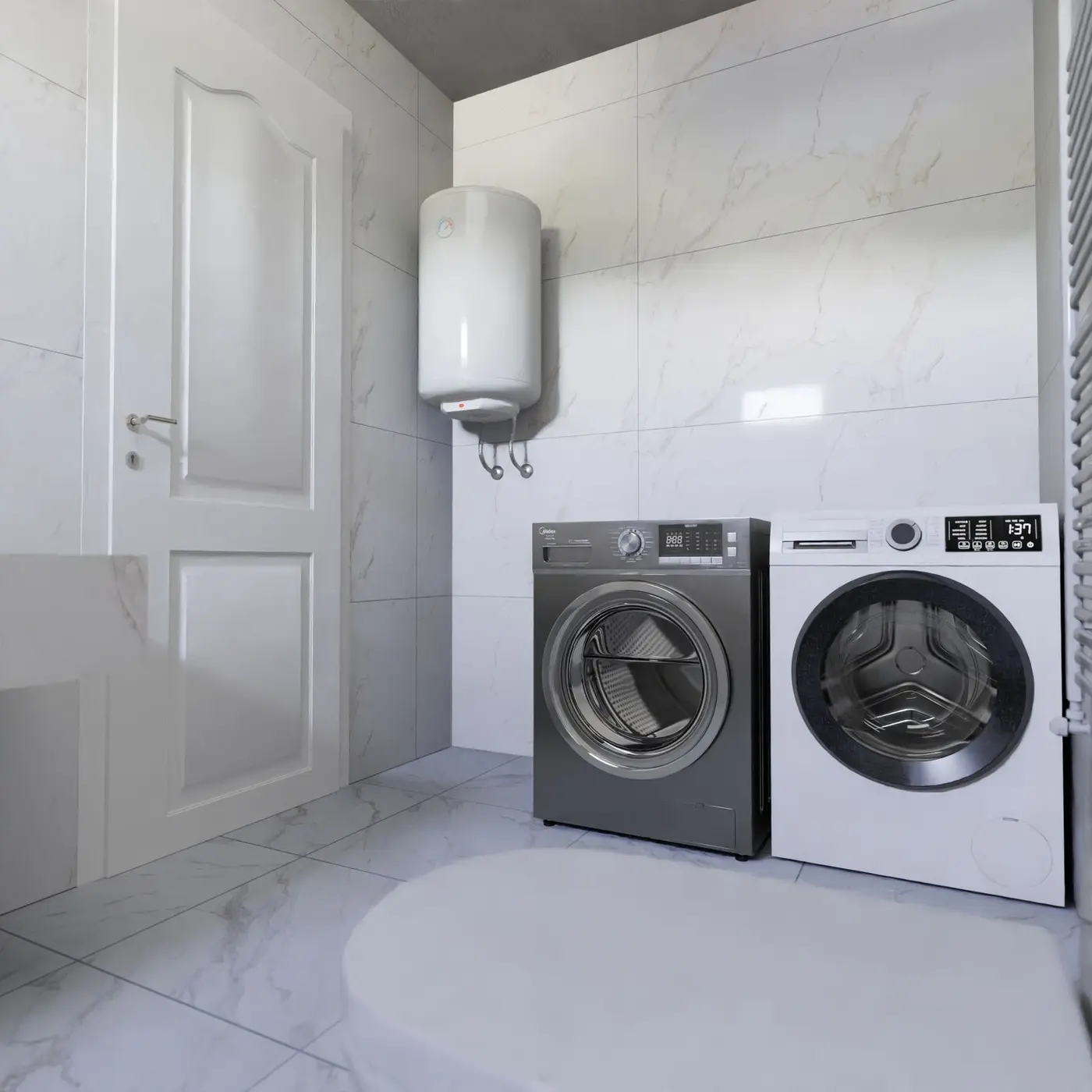
Your water heater is the hardest working appliance in the house, and the most ignored. It runs every day, often in a hot garage, on East Valley water that carries a heavy mineral load. A little scheduled attention keeps it efficient and heads off the Saturday morning cold shower.
This checklist covers what to do, how often, and which jobs are safe to handle yourself. None of it requires special tools beyond a garden hose, a bucket and a socket wrench. Work through it once and the next pass takes half the time.
Every few months: look, listen and check for moisture.
Walk out to the heater and give it two honest minutes. Look for rust streaks on the shell, corrosion on the fittings, and any dampness in the drain pan or on the slab around the base. On a gas unit, sniff near the burner compartment for any gas odor.
Listen while it heats. A healthy tank is quiet. Popping, rumbling or crackling means sediment is collecting on the bottom, and that is your cue to move the annual flush up the calendar. Catching small signs early is the entire game with water heaters.
Once a year: flush the tank.
Sediment is the main thing that kills water heaters in Mesa, and flushing is how you fight it. Set the thermostat to vacation or pilot, shut off the cold inlet, and connect a garden hose to the drain valve. Run the hose to a floor drain or out to the driveway.
Open the drain valve and a hot tap somewhere in the house, then let the tank empty. Crack the cold inlet a few times to stir up the last of the sediment. When the water runs clear, close everything, refill the tank completely, and only then restore power or relight the burner.
Test the temperature and pressure relief valve.
The T and P valve is the safety device on the side or top of the tank. Once a year, lift its test lever briefly with a bucket under the discharge pipe. Water should flow while the lever is up and stop completely the moment you release it.
A valve that will not open, or keeps dripping afterward, needs replacement. Never plug or cap it. That valve is what stands between a stuck thermostat and a ruptured tank, so treat this as the one test you never skip.
Check the anode rod every couple of years.
The anode rod sacrifices itself so the tank lining does not rust. Hard desert water chews through rods faster than most owner manuals assume. Shut off the water and power, break the hex head loose on top of the tank, and pull the rod up for a look.
Replace it once it is pitted down to the steel core wire or caked in hard calcium. A fresh rod is a small part that buys real years of tank life. If the head will not budge or ceiling clearance is tight, this is a fair job to hand to a plumber.
Tankless units need attention too.
Tankless heaters skip the tank but not the maintenance. Scale collects on the heat exchanger instead, and in East Valley water it collects quickly. An annual descaling flush with a pump kit and a food grade descaler keeps the exchanger clean and the hot water flow steady.
Clean the inlet water filter and the air intake screen while you are at it. If your unit throws error codes, runs lukewarm, or loses flow when a second fixture opens, scale is the usual suspect. Regular flushing is what lets a tankless unit deliver on its long service life.
Know which jobs to hand off.
Flushing, valve tests and filter cleaning are honest DIY territory. Gas work, a stuck anode rod, a leaking shell, or anything involving the venting is not. The same goes for a drain valve that refuses to close after a flush. Do not fight it alone.
A yearly professional inspection pairs well with this checklist, especially for heaters past the midpoint of their life. Prestige Plumbing services tank and tankless units across Mesa and the East Valley. Estimates are free, and the phone is answered around the clock, every day.
The short version.
- Flush the tank once a year before sediment hardens into a permanent layer.
- Test the relief valve annually and replace it if it sticks or keeps dripping.
- Check the anode rod every couple of years and swap it once it is eaten.
- Tankless units need an annual descaling flush in East Valley water.