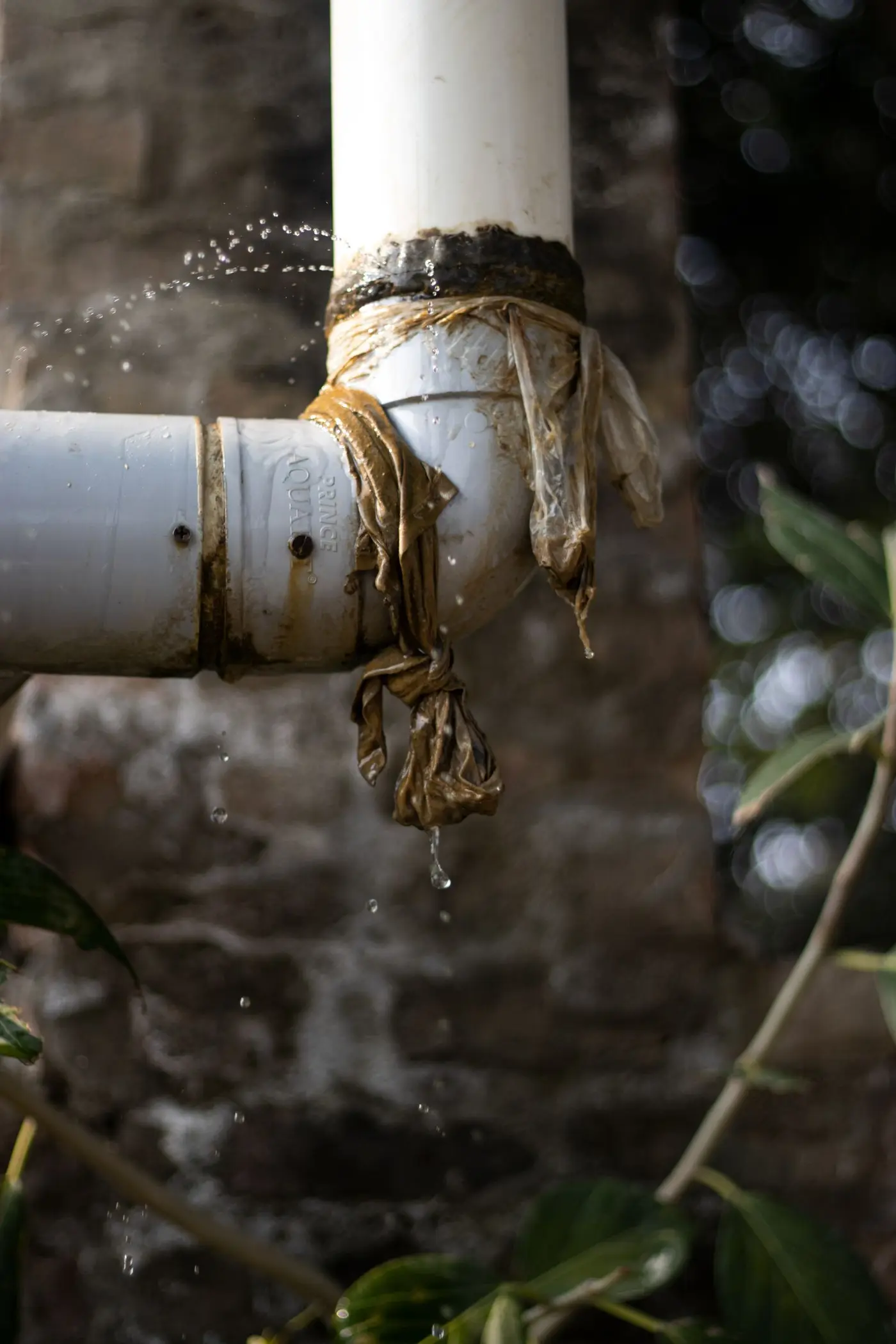
The worst leaks are the quiet ones. A burst pipe announces itself and gets fixed the same day. A pinhole in a hidden line can run for months. It soaks the ground under your foundation while the water bill quietly creeps upward.
Most Mesa homes sit on slab on grade foundations, with water lines running under or through the concrete. That makes hidden leaks something of a local specialty. The good news is that your house drops hints, and a few simple checks can catch a leak long before it becomes a demolition project.
Start with the water meter test.
Turn off every fixture and appliance that uses water. No sprinklers, no ice maker, no laundry mid cycle. Then find your water meter and watch the small flow indicator, the little dial or triangle that spins whenever water moves through the line.
If everything is off and that indicator still turns, water is leaving the system somewhere. For slower leaks, note the meter reading, wait an hour without using any water, and check it again. Movement with the house shut down is the clearest evidence you can gather on your own.
Read your water bill like a gauge.
Usage should track your habits. Same house, same people, same season, roughly the same bill. When the number climbs for two or three months with no change in routine, something is using water without asking you first.
Compare against the same month last year, not just the month before. Desert summers push usage up for everyone in the Valley, so a July against July comparison tells you far more than a May against July one ever will.
Learn the small tells around the house.
A warm patch on the floor often means a hot water line leaking under the slab. A faint hiss near a wall when everything is off is moving water. Musty smells, swollen baseboards and bubbling paint are water working its way into the walls.
Outside, look for a soggy spot or a patch of grass greener than the irrigation can explain. And if the water heater seems to run constantly, a leak on the hot side may be draining it about as fast as it heats.
Slab leaks deserve their own checklist.
Warm spots on the floor. The sound of running water when nothing is on. Hairline cracks showing up in tile or drywall. A meter that will not sit still. Any two of those together in a slab on grade home points hard at a slab leak.
Do not wait on this one. Water under a foundation moves soil, and moved soil is how a plumbing problem becomes a structural one. Caught early, many slab leaks can be rerouted through the attic or walls without breaking much concrete at all.
Make leak checks a seasonal habit.
Run the meter test twice a year, and always before leaving town for a long stretch. A leak that starts in June can run for an entire vacation with nobody home to catch it. Dry desert ground rarely shows a leak the way wet climates do, so the meter is your best witness.
While you are at it, find your main shutoff valve and make sure it actually turns. In an emergency, that valve is the difference between a puddle and a flooded room. Every adult in the house should know exactly where it is.
What professional leak detection looks like.
A good plumber does not guess and start cutting. Acoustic leak detection uses sensitive listening equipment to hear pressurized water escaping, and pinpoints the spot through concrete before the floor is ever opened. Pressure testing isolates which line is actually losing water.
That precision is the whole point, because it means opening one small section instead of trenching a whole room. If your meter is moving or your floor has a warm spot, Prestige Plumbing runs acoustic leak detection across Mesa and the East Valley, and every estimate is free.
The short version.
- The meter test is the fastest way to confirm a hidden leak yourself.
- Compare water bills to the same month last year, not the month before.
- A warm spot on the floor of a slab home usually means a hot line leak.
- Acoustic detection pinpoints the leak through concrete before anyone cuts.